Caravaggio’s David with the Head of Goliath – The Painter’s Dark Confession
Explore Caravaggio’s David with the Head of Goliath at the Galleria Borghese, a haunting self-portrait symbolizing guilt and redemption.
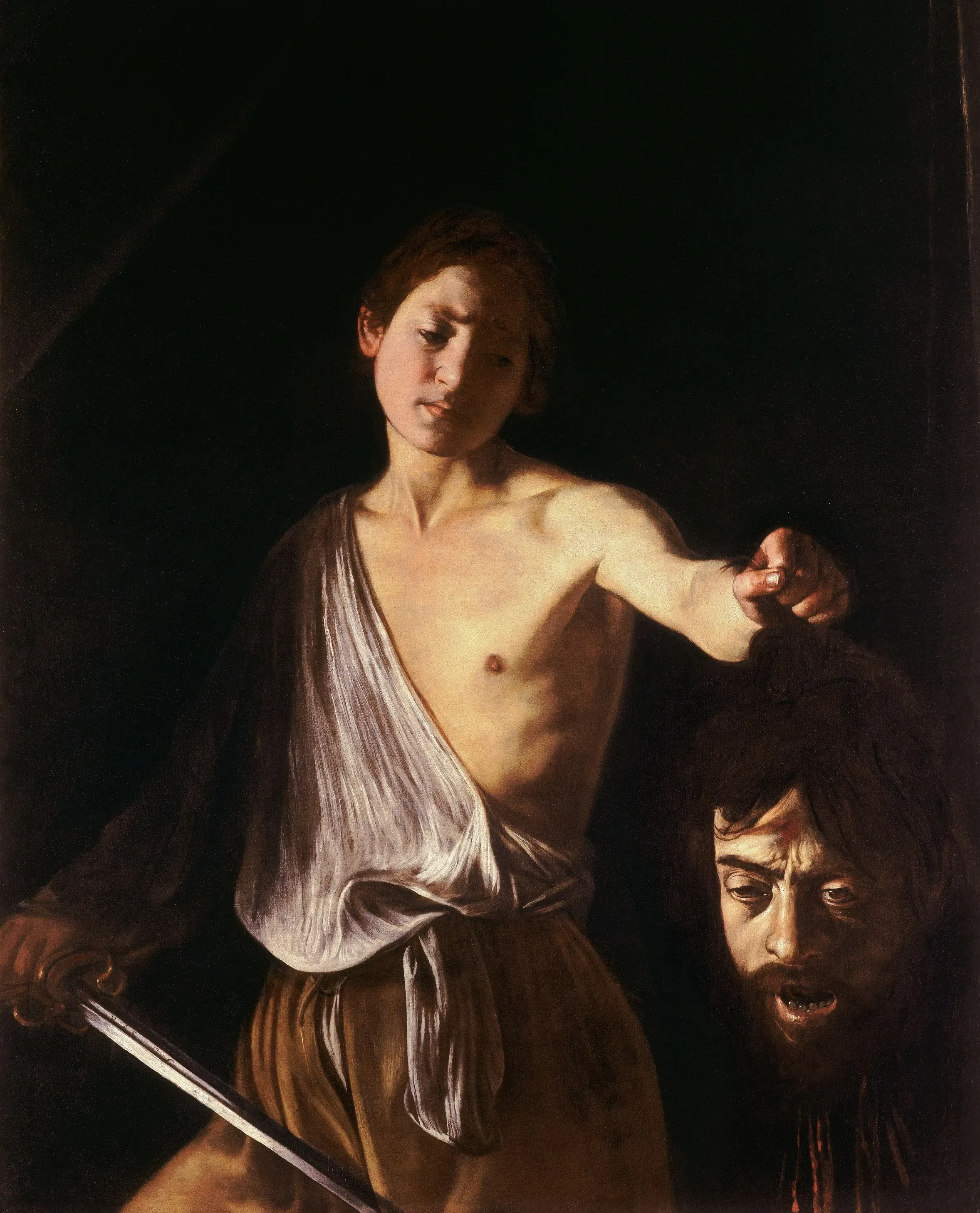
Caravaggio’s David with the Head of Goliath: A Portrait of Redemption
Painted around 1610, shortly before his mysterious death, Caravaggio’s David with the Head of Goliath is one of the most haunting works in the Galleria Borghese — a painting that feels less like a biblical scene and more like a personal confession.
The Self-Portrait of a Tormented Soul
In a striking gesture of humility, Caravaggio depicted his own face as that of Goliath, the slain giant. David, holding the severed head, gazes upon it not with triumph but with sorrow. This inversion transforms the story into a meditation on guilt, sin, and repentance.
The artist, then exiled and seeking pardon from the Pope, offered this work as an appeal for mercy. The youthful David embodies innocence and divine justice; the lifeless Goliath reflects Caravaggio’s inner torment — his violence, pride, and longing for forgiveness.
Light, Shadow, and Truth
Through his signature chiaroscuro, Caravaggio turns paint into emotion. The beam of light illuminating David’s face contrasts with the abyssal darkness enveloping Goliath’s head. Every brushstroke breathes with moral gravity.
Interpretation
Some scholars see in this painting Caravaggio’s ultimate act of self-examination — a recognition that the monster he had fought all along was within himself. The sword in David’s hand bears an inscription, “H-AS OS,” read as humilitas occidit superbiam — “humility kills pride.”
Few paintings in Rome speak so intimately of the human condition — of sin, guilt, and the fragile hope of redemption.
저자 소개

Dr. Alessandra Rossi, Art Historian
공식 미술관의 방문 안내와 소장품 목록을 바탕으로 관람 준비와 미술사적 배경을 정리한 독립 편집 가이드입니다. 미술관과의 공식 관계나 모든 판매 서비스에 대한 개인적인 이용 경험을 주장하지 않습니다.
Tags
Comments (0)
Loading comments...